Tone & texture · Fairfax, VA
Secret RF microneedling
Secret RF combines fine needles with bipolar radiofrequency. Our treatment options include 25-pin semi-insulated and 25-pin non-insulated tips. Both have 25 needles; the difference is the insulation and resulting energy-delivery pattern, not the needle count. Your provider selects the appropriate tip for the concern, skin and treatment area.
Who it may suit
A treatment for your concern.
Not everyone’s concern.
Patients with selected acne scars, textural irregularity or mild laxity. Suitability for deeper skin tones must be assessed rather than described as risk-free.
Where it may be used
Face and selected body sites according to labeling and clinical assessment.
A visual guide, not a clinical result
See the concern.
Understand the goal.
Drag each comparison to explore a treatment goal. AI illustrations, not patient results.
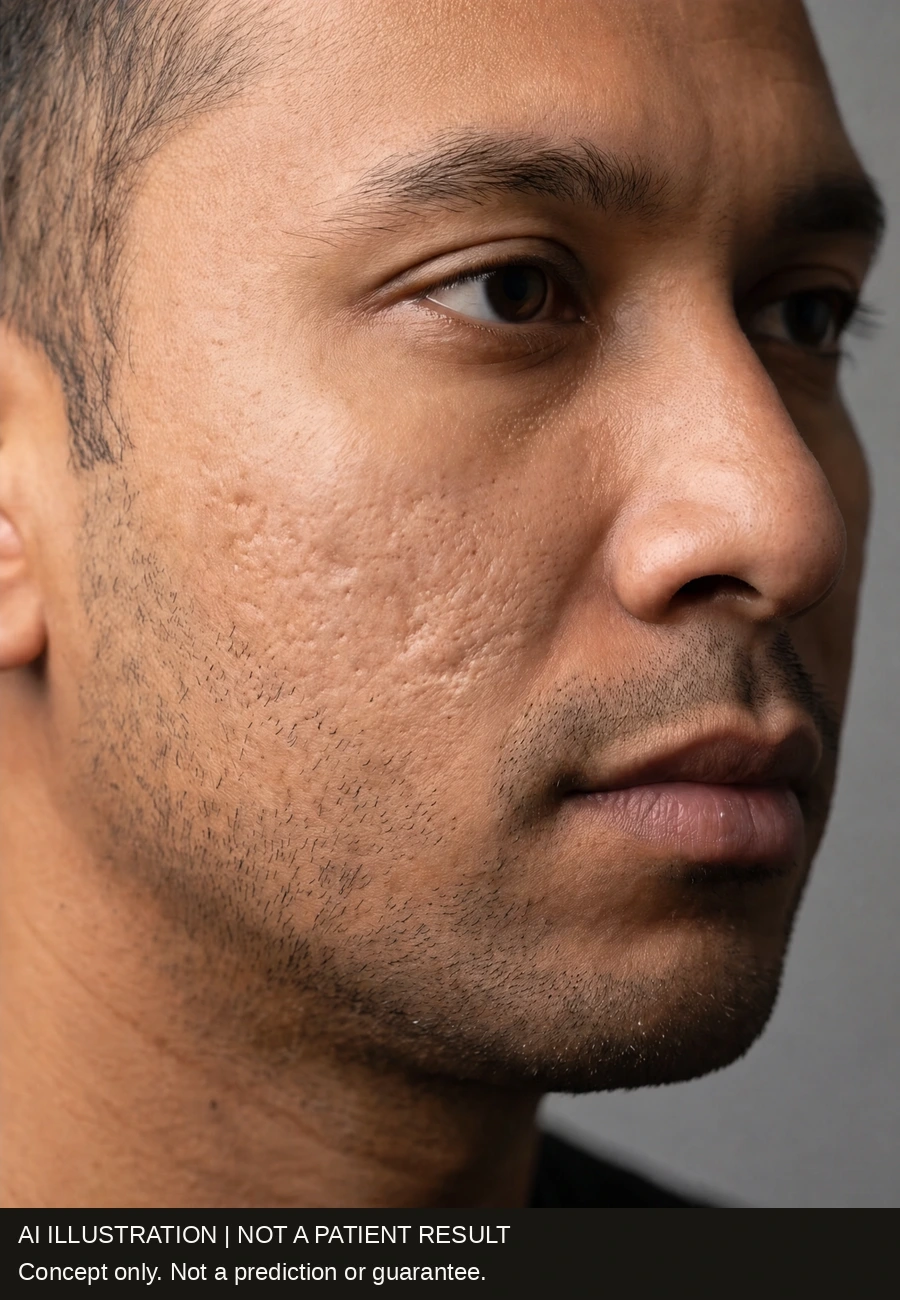
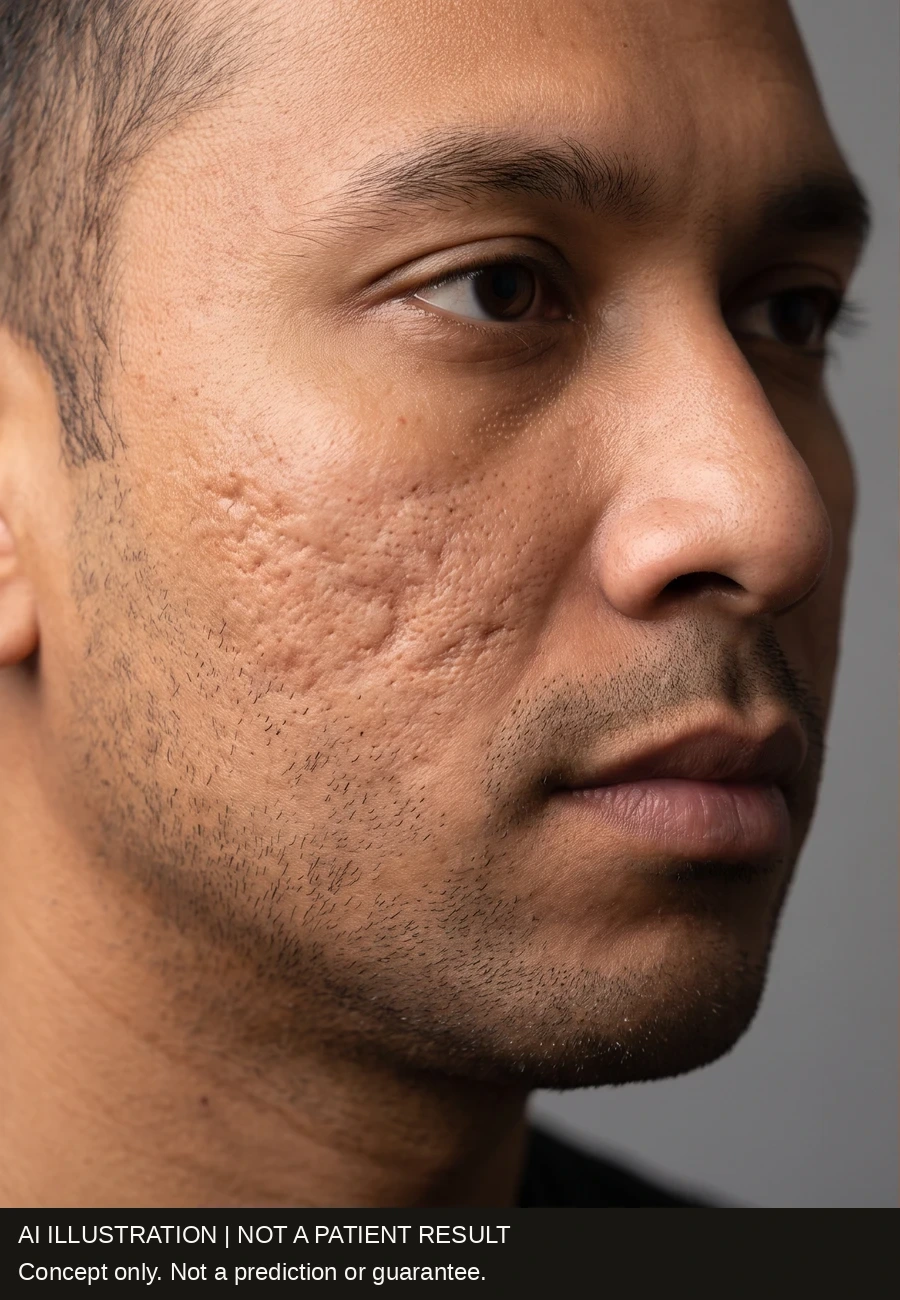
Drag the divider or use the slider below. Keyboard: arrow keys adjust; Home and End show either side.
This generic scar-remodeling illustration is not a comparison between tip types and does not predict Secret RF results.
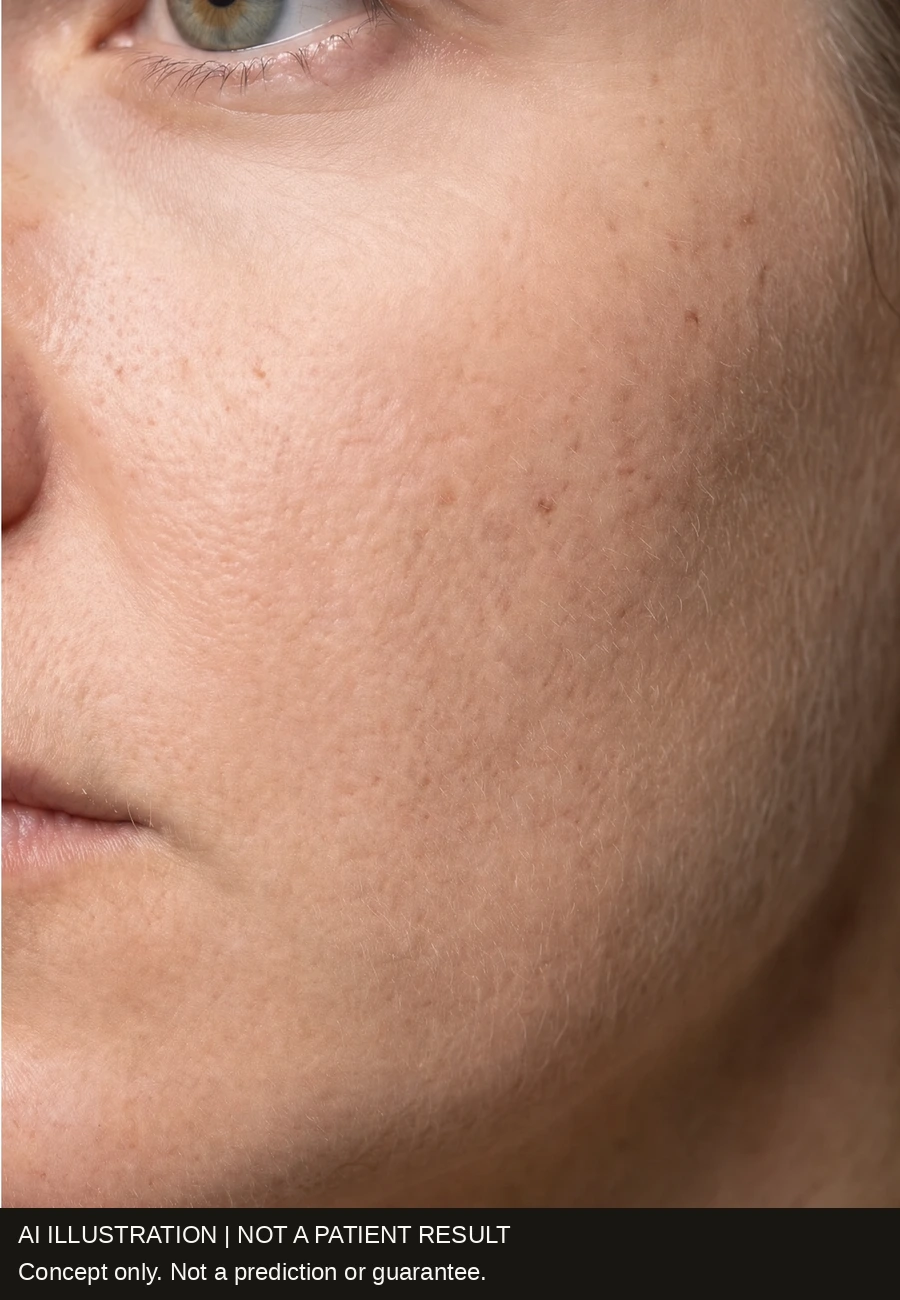
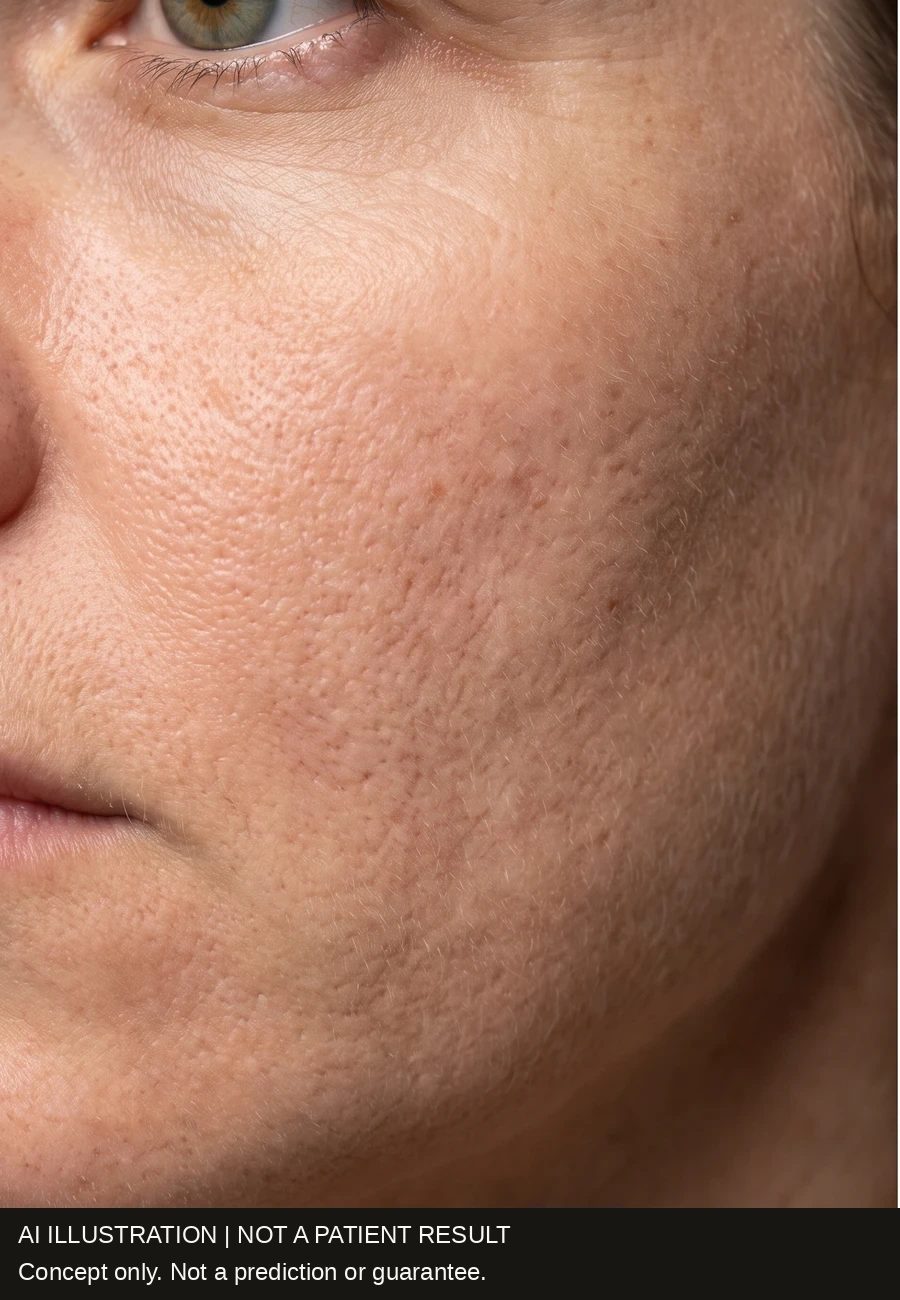
Drag the divider or use the slider below. Keyboard: arrow keys adjust; Home and End show either side.
A shared educational texture comparison, not a prediction of any one treatment. The appropriate procedure depends on the cause of the concern.
Understand the treatment
What happens
beneath the surface?
With the 25-pin semi-insulated tip, insulation covers part of each needle shaft and energy delivery is concentrated around the exposed terminal portion. With the 25-pin non-insulated tip, the uninsulated shaft allows energy delivery along its inserted length. This does not make one automatically stronger or better. Both differ from surface monopolar RF and from standard microneedling without heat. The Cutera brochure lists an adjustable needle-insertion capability of 0.5–3.5 mm; this is not a universal RF penetration depth or a recommended setting for every facial area.
The Cutera brochure lists 0.5–3.5 mm adjustable needle insertion. This is equipment capability, not a recommendation for any particular area. Five needles are shown in the side-view cutaway as a representative row of the 25-pin array. Coating lengths and heating zones are exaggerated for clarity, not measured specifications.
What the drawing means
Needle-delivered thermal zones
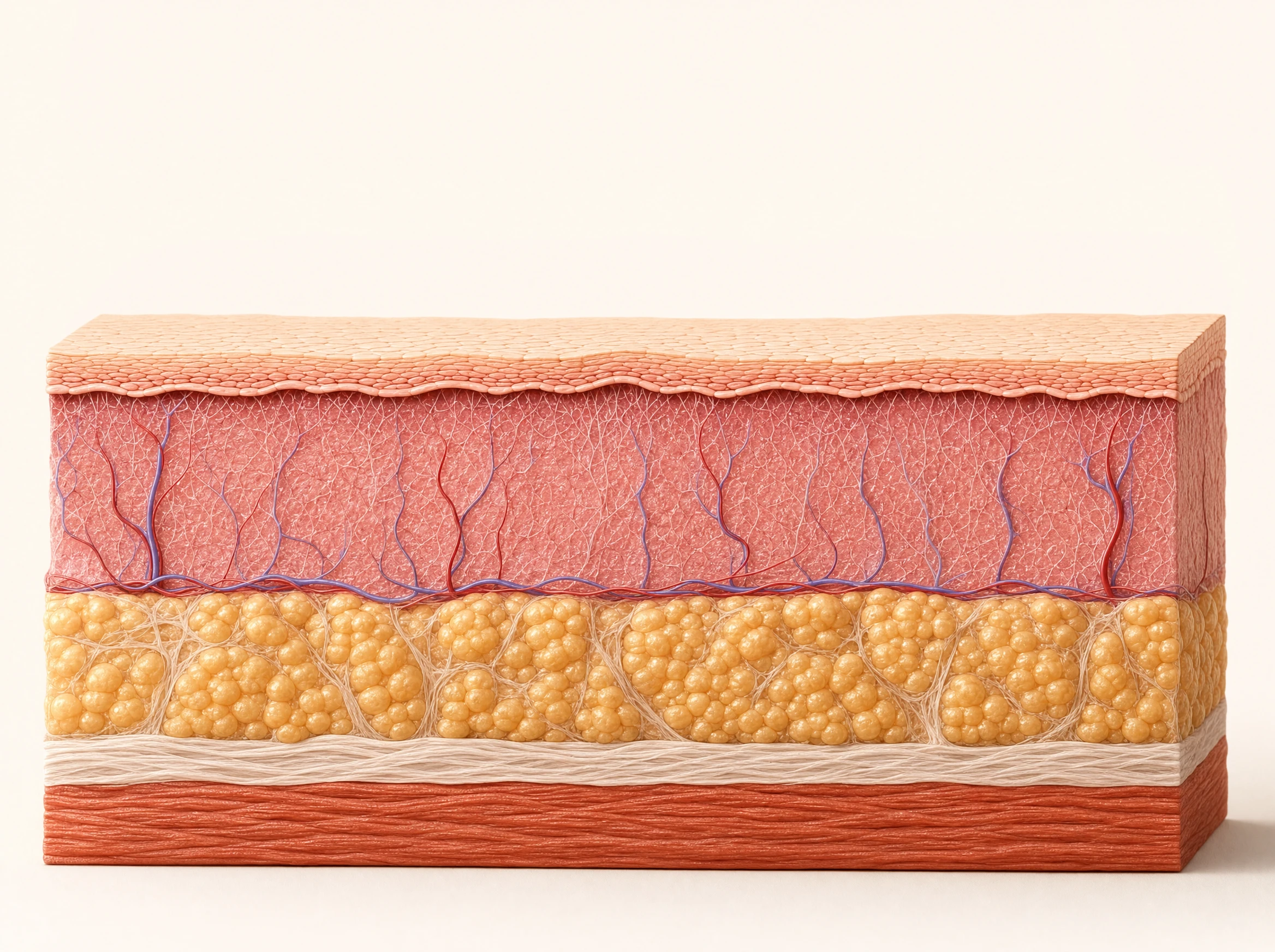
RF microneedling combines needle penetration with thermal energy in selected tissue. It is not the same as surface RF or standard microneedling. This drawing is not a depth or energy-setting guide.
- 1EpidermisOuter protective barrier
- 2DermisCollagen-rich supporting skin
- 3Subcutaneous fatUnderlying fatty tissue
- 4Supporting fasciaConnective support; anatomy varies
- 5MuscleMovement and expression
The practical details
What to expect.
- Downtime
- Redness, swelling and pinpoint marks; duration varies.
- Comfort
- Numbing and a personalized comfort plan.
- Results show
- Gradual remodeling over weeks to months.
- How long it lasts
- Variable; course and follow-up depend on response.
- 01
Map: identify scar type, tissue thickness, pigmentation risk and previous treatments.
- 02
Select and treat: choose the appropriate 25-pin tip and an anatomy-specific plan; more depth or energy is not automatically better.
- 03
Review: allow healing and remodeling before deciding whether more treatment is needed.
Honest expectations
What it cannot promise.
Severe or tethered scars may need subcision or other modalities. More energy does not always mean better results.
Common questions
Before you book.
What is the difference between the two 25-pin tips?
Semi-insulated needles have a partly coated shaft, concentrating RF delivery near the exposed ends. Non-insulated needles deliver RF along the exposed inserted shaft. Both contain 25 pins.
Which 25-pin tip is better for me?
Neither is universally better. The clinician considers your skin type, scar or texture concern, treatment area, tissue thickness and previous response. Tip choice does not remove the risk of burns or pigment changes.
Does 25-pin mean a different machine or treatment depth?
No. It describes the needle array. Insulation design and needle insertion depth are separate characteristics. The published 0.5–3.5 mm range is a device capability, not a patient-specific recommendation.
Is semi-insulated treatment risk-free for darker skin?
No. Insulation can limit energy delivery along the coated shaft, but pigment changes and other complications remain possible. Individual assessment and careful settings still matter.
Why not treat every scar with the same device?
Ice-pick, boxcar and rolling scars behave differently. A scar map helps avoid treating only the surface of a deeper problem.
Will I need a booster?
Not necessarily. Any adjunct must be evaluated separately for safety, evidence and regulatory status.
How do I book in Fairfax?
Visit our Boulevard booking page or call (571) 234-5135. We are at 11240 Waples Mill Road, Suite 302, Fairfax, VA 22030. Booking opens Boulevard’s self-booking panel when available, with hosted booking as a fallback. Boulevard supplies the booking options; the educational treatment pages are not automatically synchronized with your patient records or service catalog.